The Line
2026Bespoke telecommunication service for artistic bewilderments
Bring a question
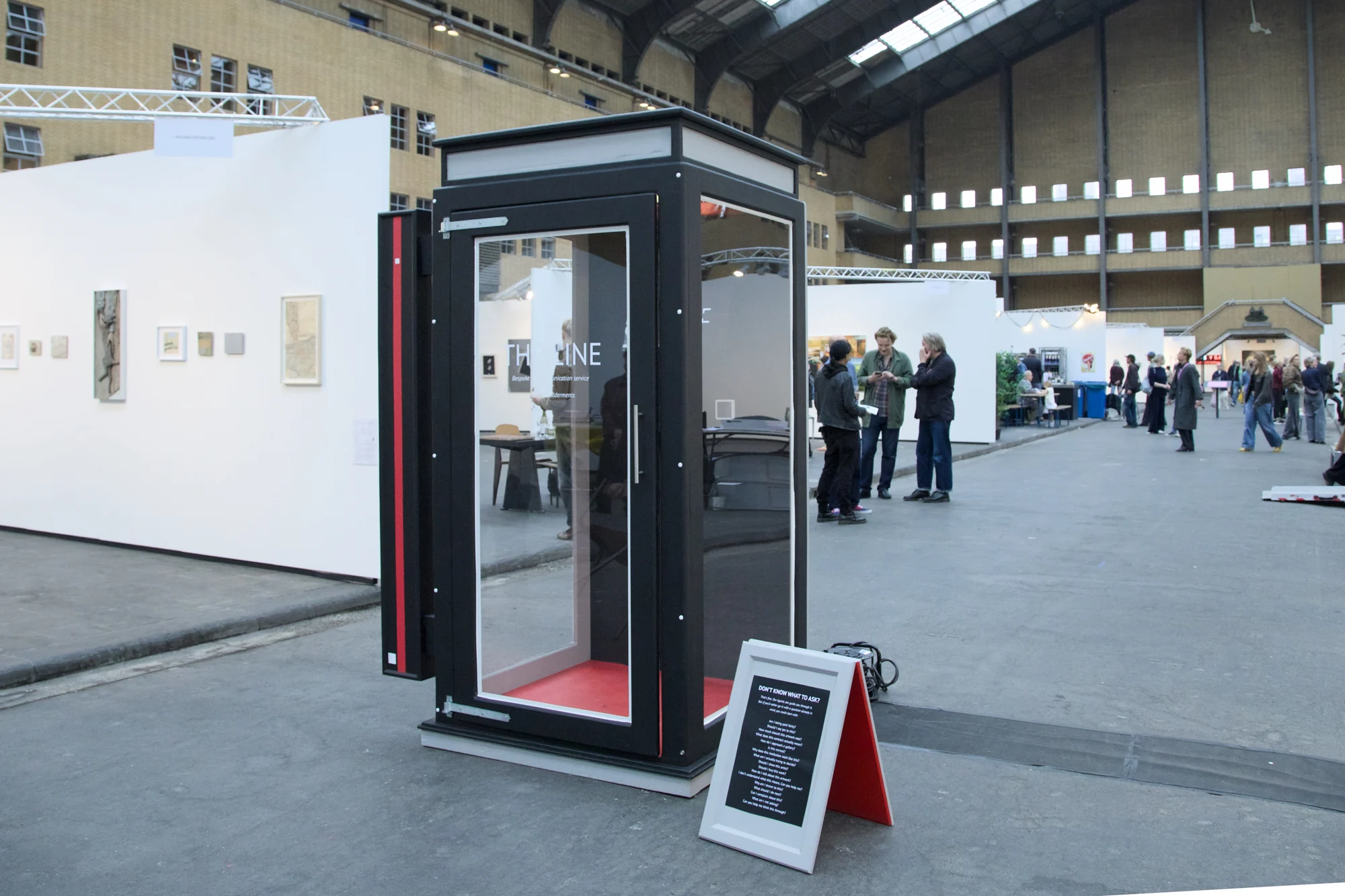
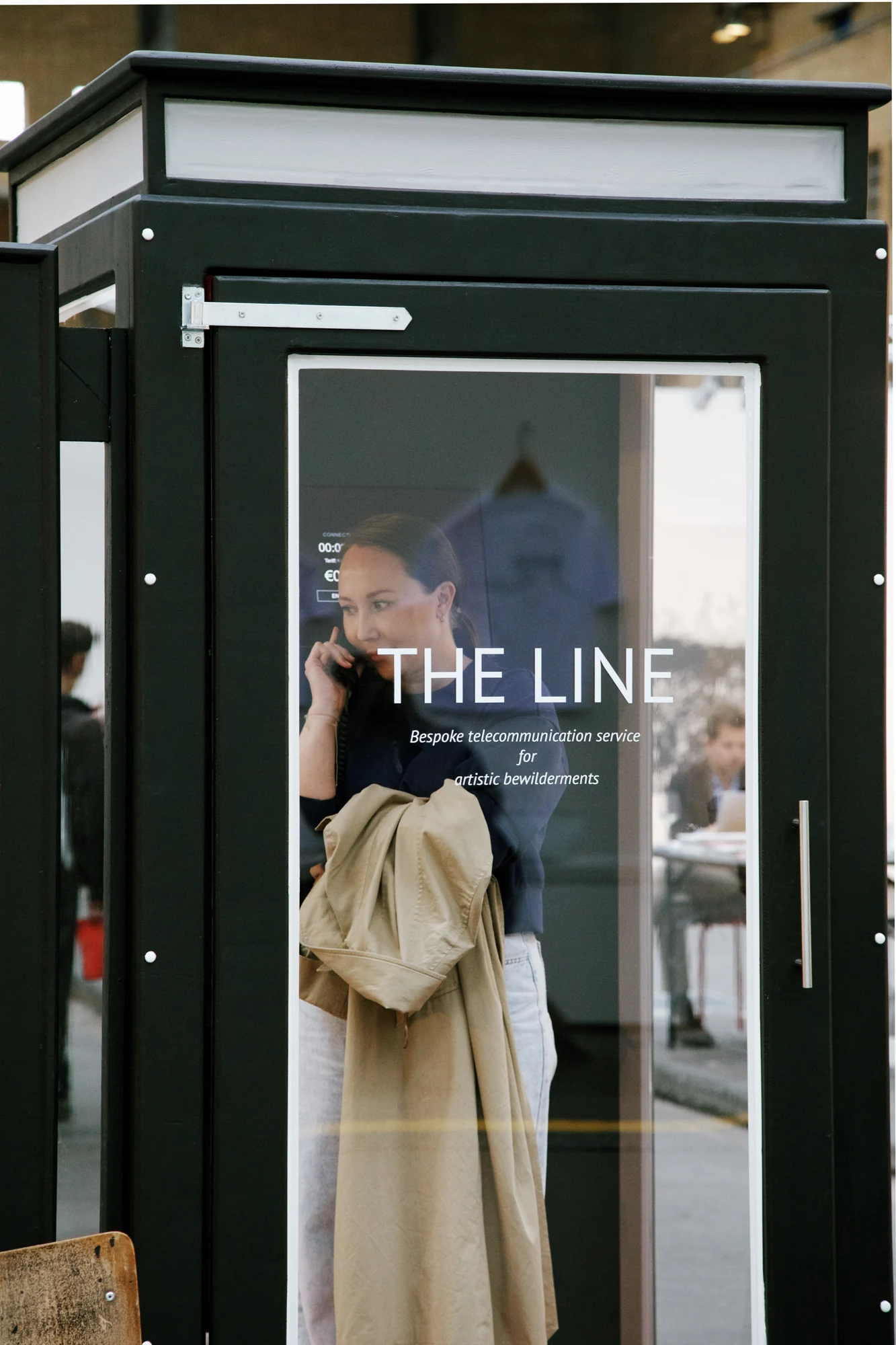
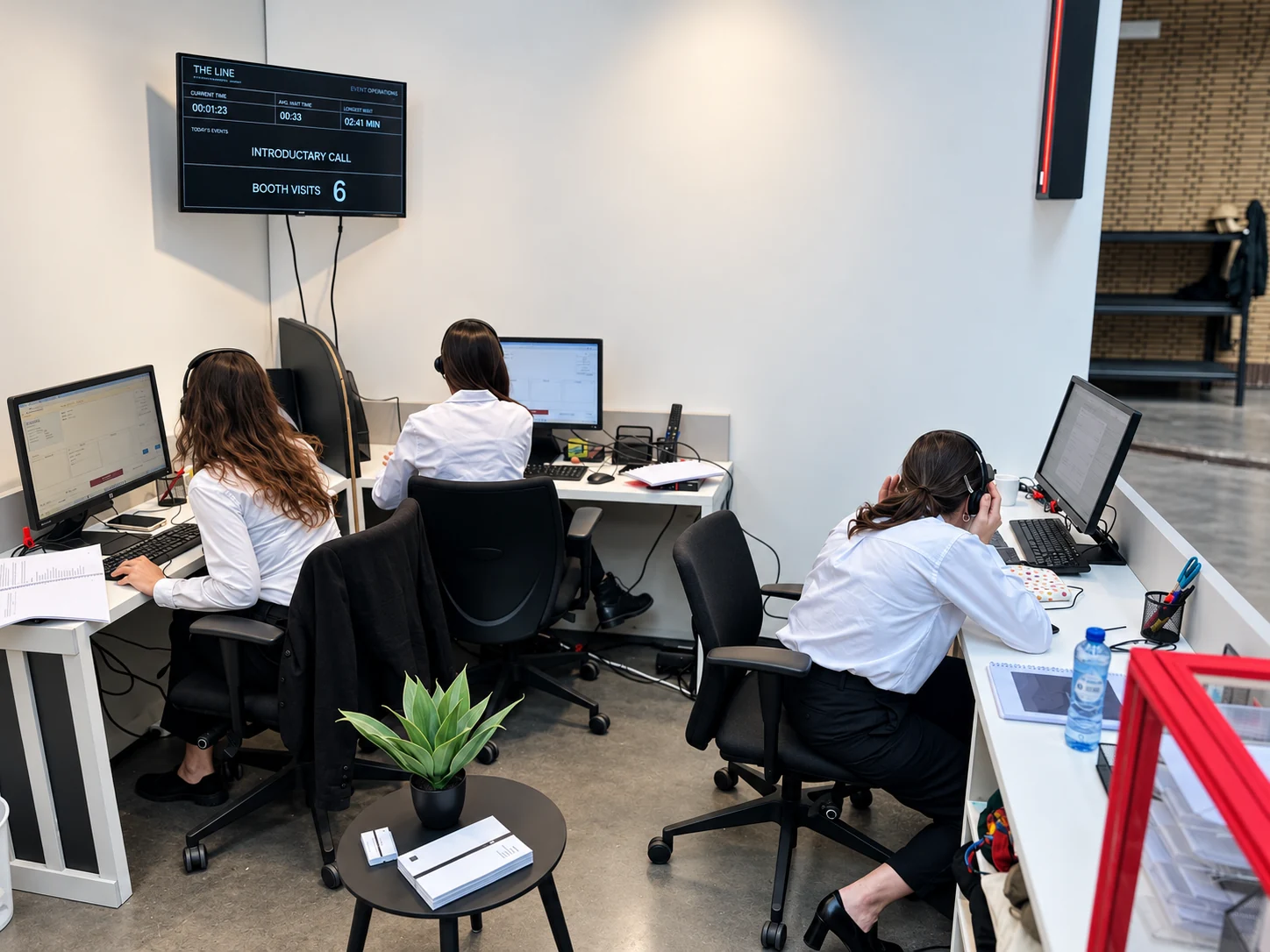
The Line is a human-operated call centre inside an art fair. Visitors enter a booth and speak to agents working in a separate booth. They can bring a question about their practice, an institution, a decision, or something they cannot quite put into words.
The agents listen for the need beneath the first question. A caller may arrive looking for practical advice and leave with a different understanding of what they want to ask.
Department of Destruction, the fictional bureau behind The Line, develops an ongoing series of live performances around labour and institutions. Here, the team works through the familiar procedures of a service desk: questionnaires, handovers, waiting music and a bill at the end.
I worked on the creative coding, conceptual development and technical production of The Line, alongside Shivani Gowda and Kes Lugt, who led the project’s artistic direction.
The agents received a manual with instructions, suggested dialogue and guiding questions for their conversations. You can read the full manual here.
Inside the department
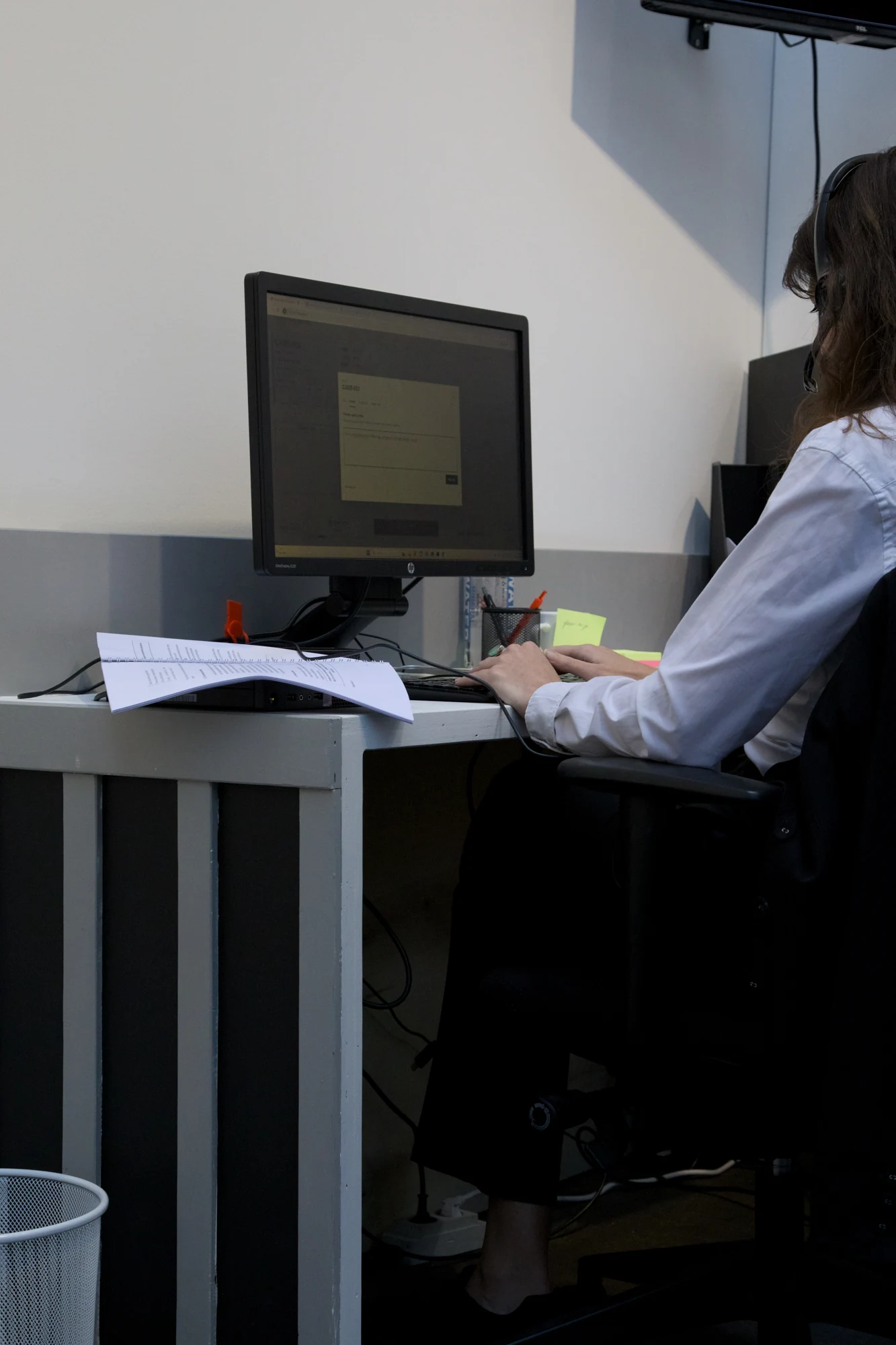
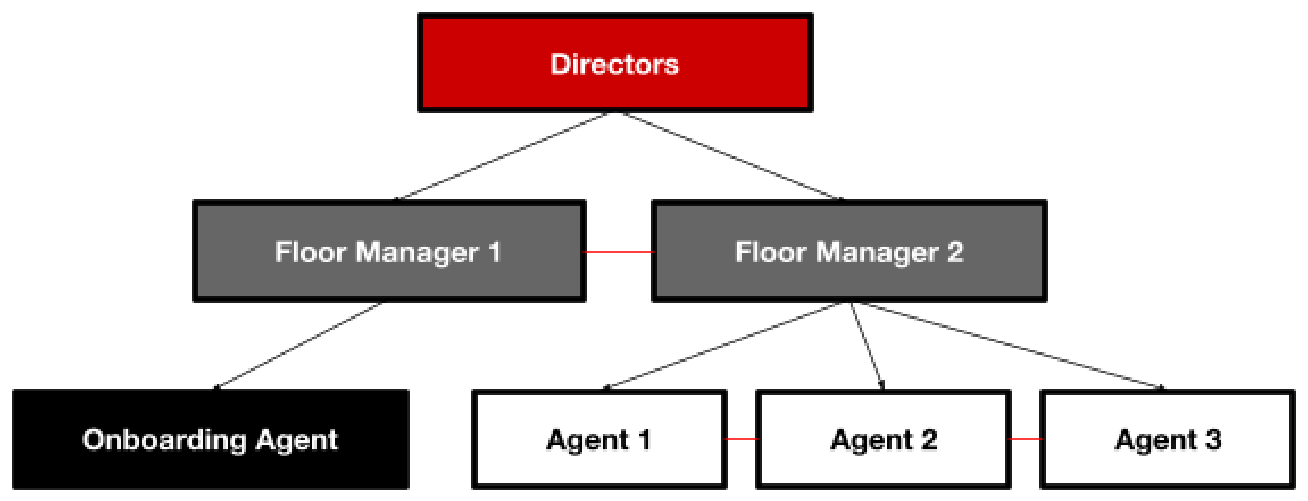
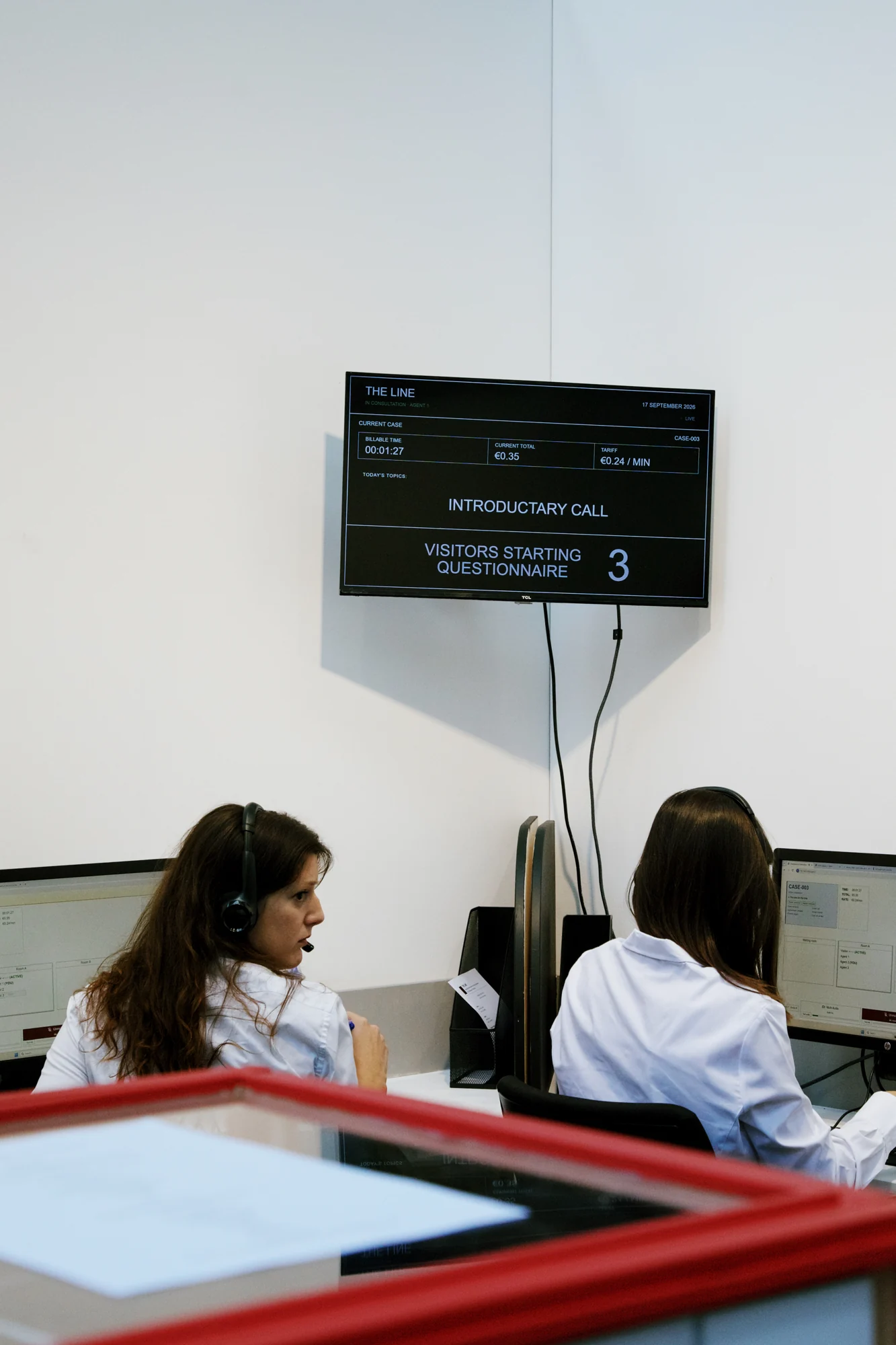
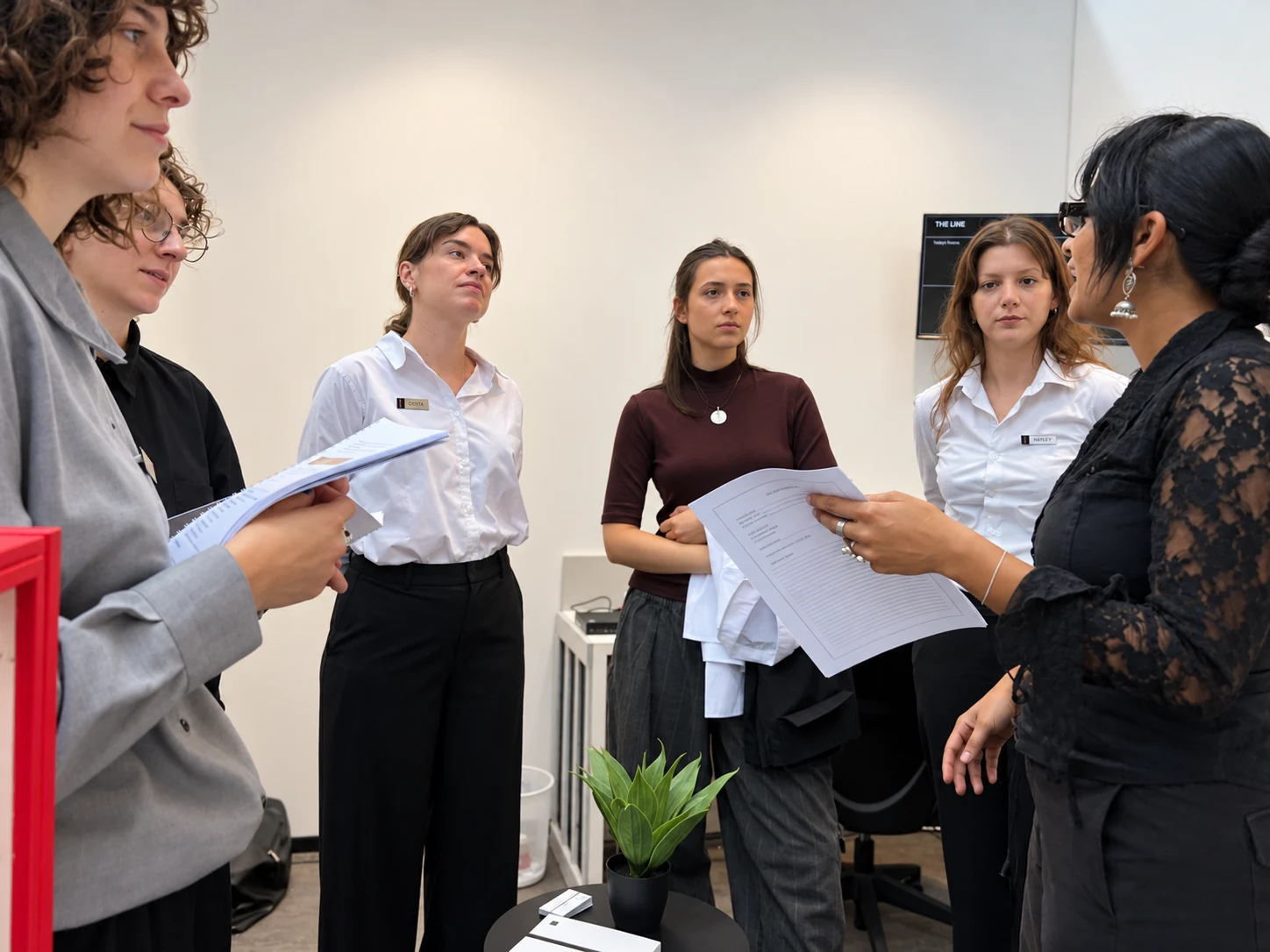
Two directors and two floor managers support an onboarding agent and three call agents. Each call agent approaches the caller’s question from a different position.
- First contact
- Agent 1 listens, clarifies the question and decides how to route the call.
- Practical research
- Agent 2 looks for information and practical possibilities. This is the only call agent with internet access.
- Another perspective
- Agent 3 works with personal, intuitive and abstract approaches, helping the caller reframe the question.
Call sequence
Before the call, the visitor completes a digital questionnaire about their role in the art sector, income band, who will pay, and what they want from the conversation. Agent 1 then takes the call and helps put the question into words.
As the conversation develops, agents update the current question and pass its context to one another. They can transfer the caller for research or another perspective, use hold music while they work, or bring agents together in a shared call with the caller’s consent.
- ArrivalQuestionnaireSituation, question and tariff
- First contactAgent 1Listen and clarify
- As neededAgent 2 / Agent 3Research or reframe
- As it changesCurrent questionUpdate and pass on context
- CloseResolved / CutFinish the call and settle payment
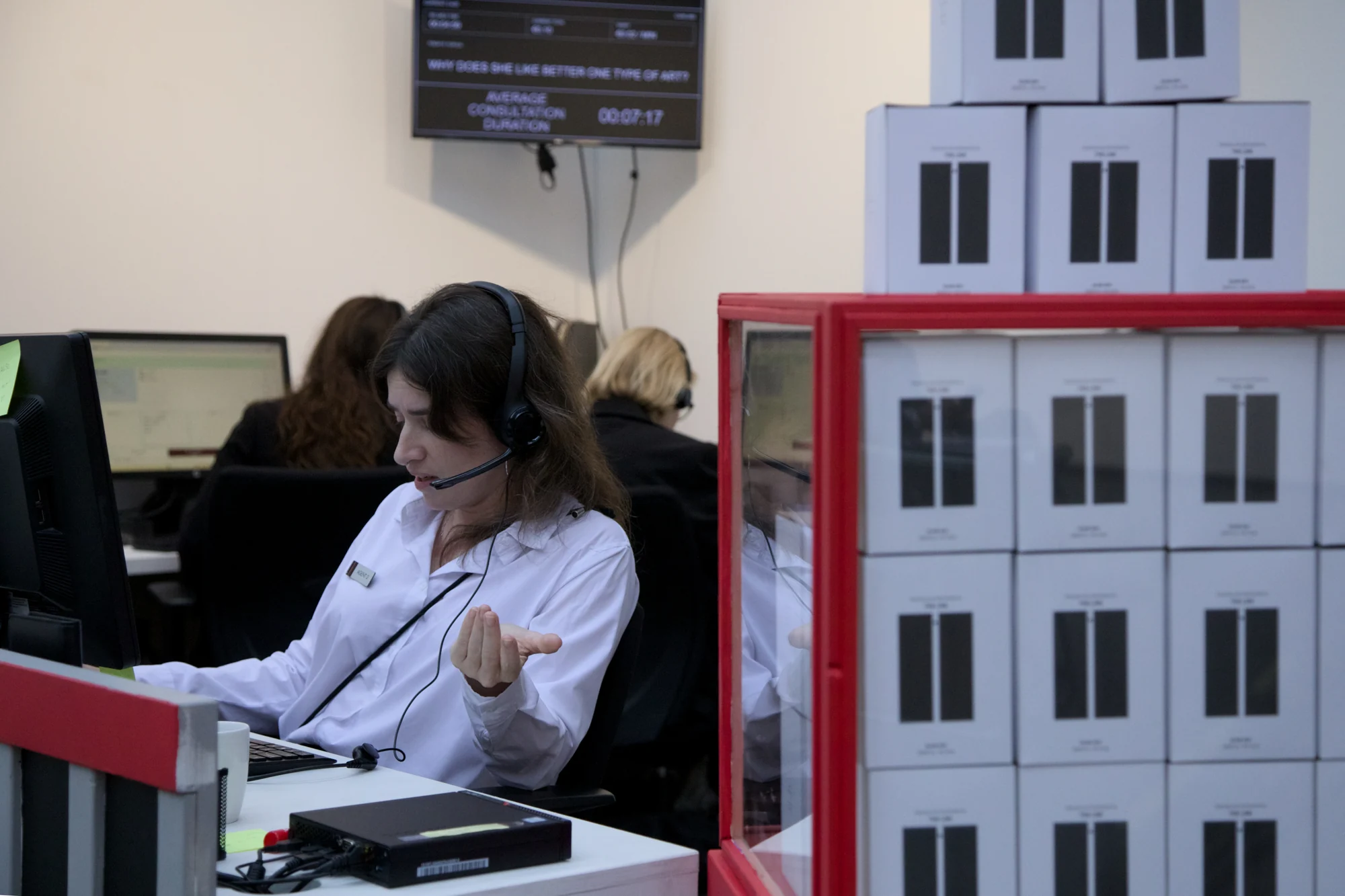
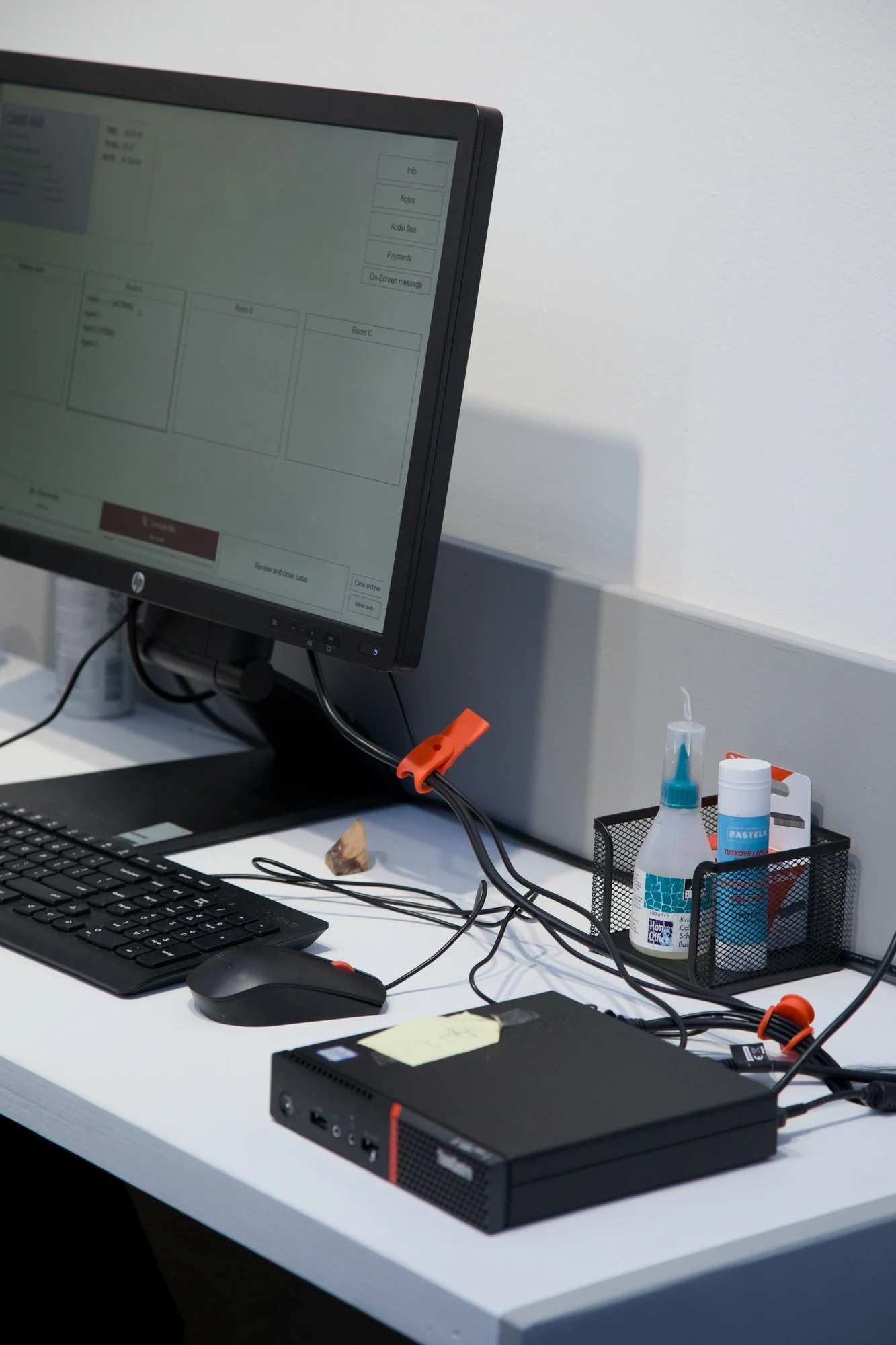
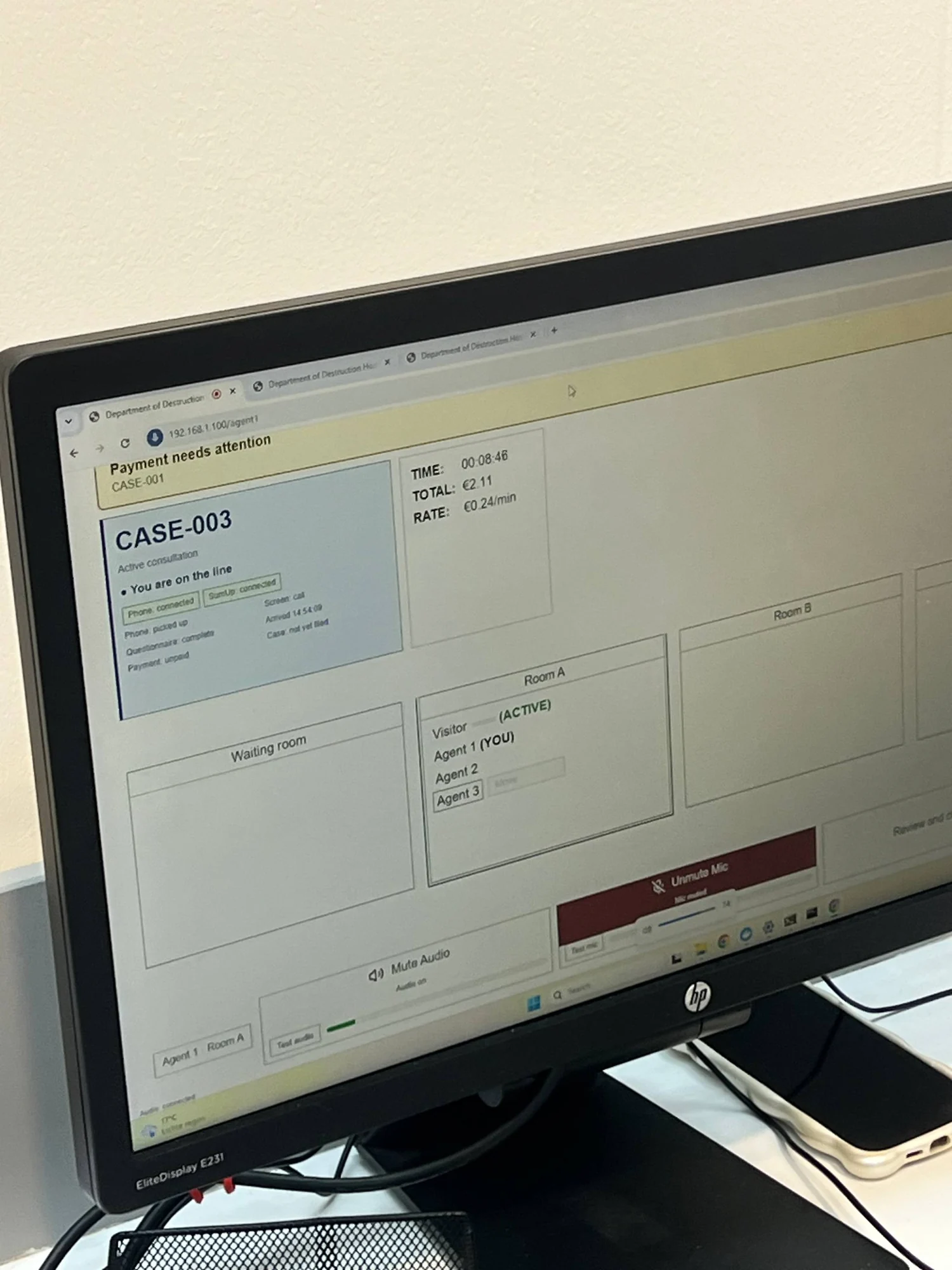
At the end, the agent records the call as RESOLVED or CUT. The caller settles payment after the conversation. Throughout the call, the team keeps track of who is speaking, what has changed, and where the question needs to go next.
The price of a question
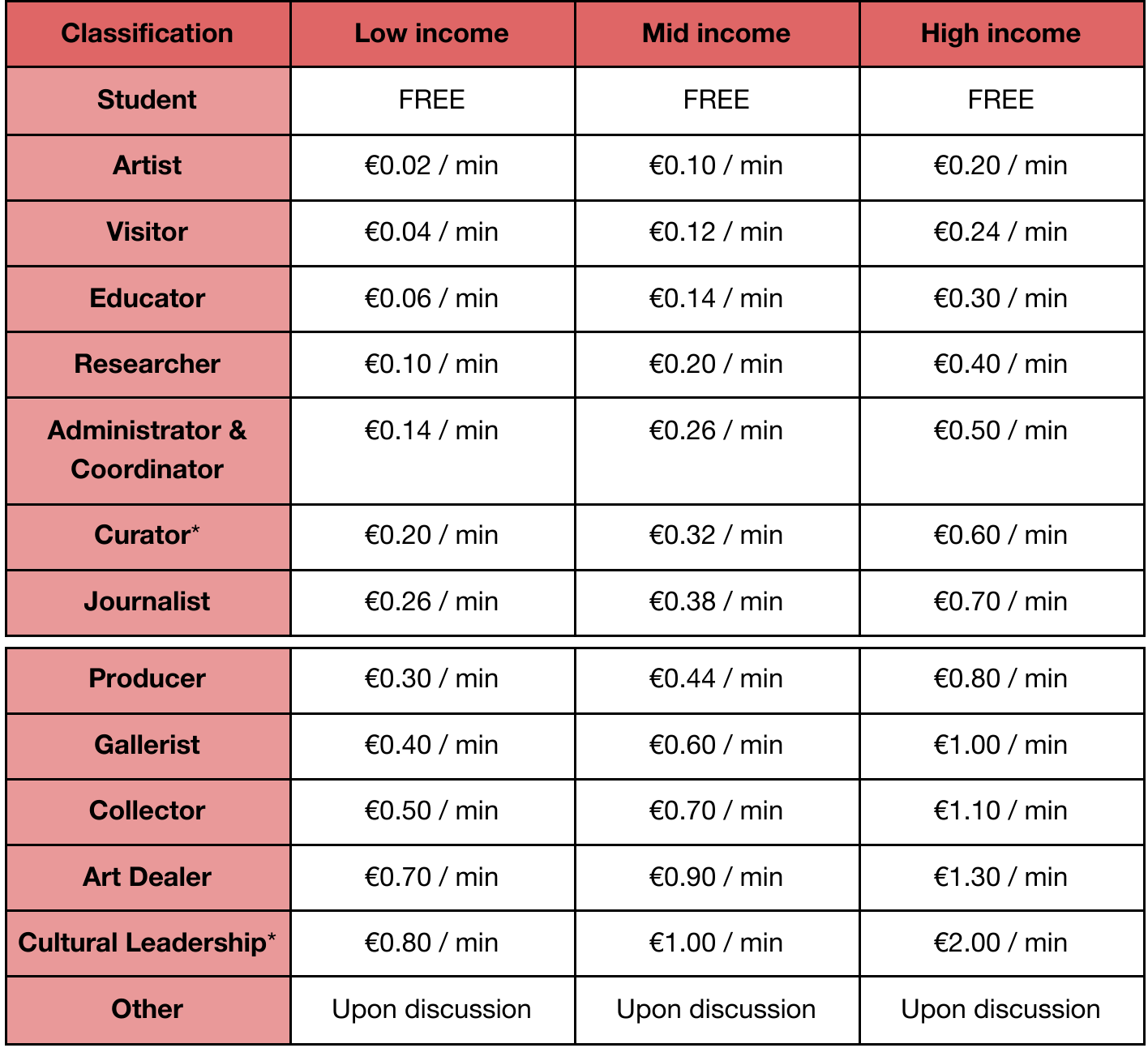
The onboarding questionnaire helps the team set a provisional sliding tariff. Students call for free. Agents can reduce or waive a charge when the caller’s circumstances require it.
The team splits income from calls according to hours worked. Payment, access and the value of the agents’ time sit inside the performance, alongside the question each visitor brings.
Manual
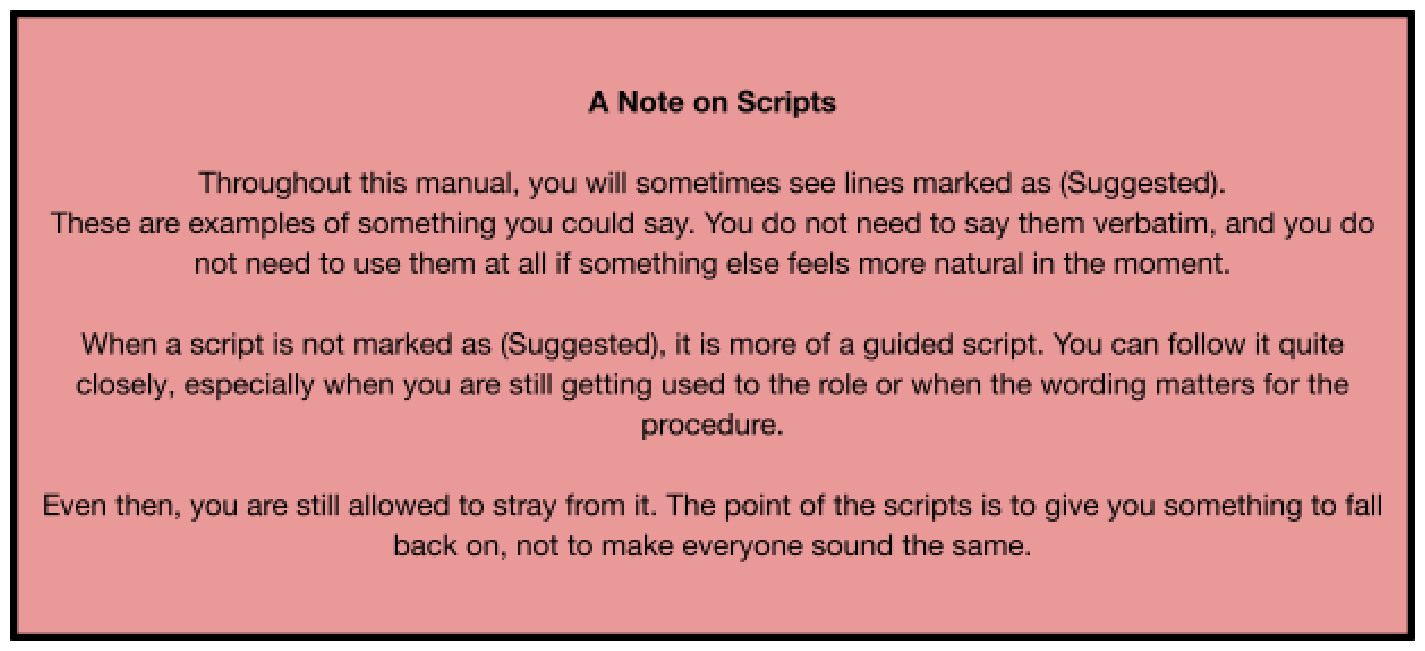
Before taking calls, agents received a manual covering the department’s hierarchy, scripts and procedures. It includes ways to open a conversation, questions to ask, and suggestions for what to say when a caller is unsure, needs practical help or wants another perspective. Some passages are fixed scripts; others leave room for the agents’ own judgement.
Agents keep a shared field journal and a private notebook. Floor managers provide support, arrange cover and help make room for breaks. The work depends on the team listening to one another as well as to the caller.
The full manual opens in a new tab. Personal information has been redacted; names remain.
Blind Boxes
Alongside The Line, the department offers Blind Boxes containing original artworks by early-career and recently graduated artists. Buyers choose a box before they know the artist or the work inside. The artist receives 97% of the sale.
At the fair, a visitor can pay for time spent considering a question, or buy an artwork they have not yet seen. Both ask the visitor to make a decision before knowing what they will receive.
Credits
- Artistic Direction, Conceptual Development and Production
- Shivani Gowda & Kes Lugt
- Creative Coding, Conceptual Development and Technical Production
- Ilja Kolosovs
- Calling Booth Fabrication
- Boris Steiner
- Agent Booth Fabrication
- Elmar: Maatwerk Ruimteoplossingen
- Build and Installation
- Jerome Arrigan
Pim Visser - Voice
- Yorrick van der Ouw
- Sound Production and Audio Engineering
- Kristijonas Groblys
- Agents and Floor Staff
- Albina N
Alease B. Hansen-Evelyn
Anastasia Troshkova
Bethany White
Ines Kukrić
Jiyoung Yim
Julianne
Lara Škulić
Roselyn Flach - Special Thanks
- by and by, Arne, Klara Kovacic, Anton Bogdan & Scarlett Kraidy